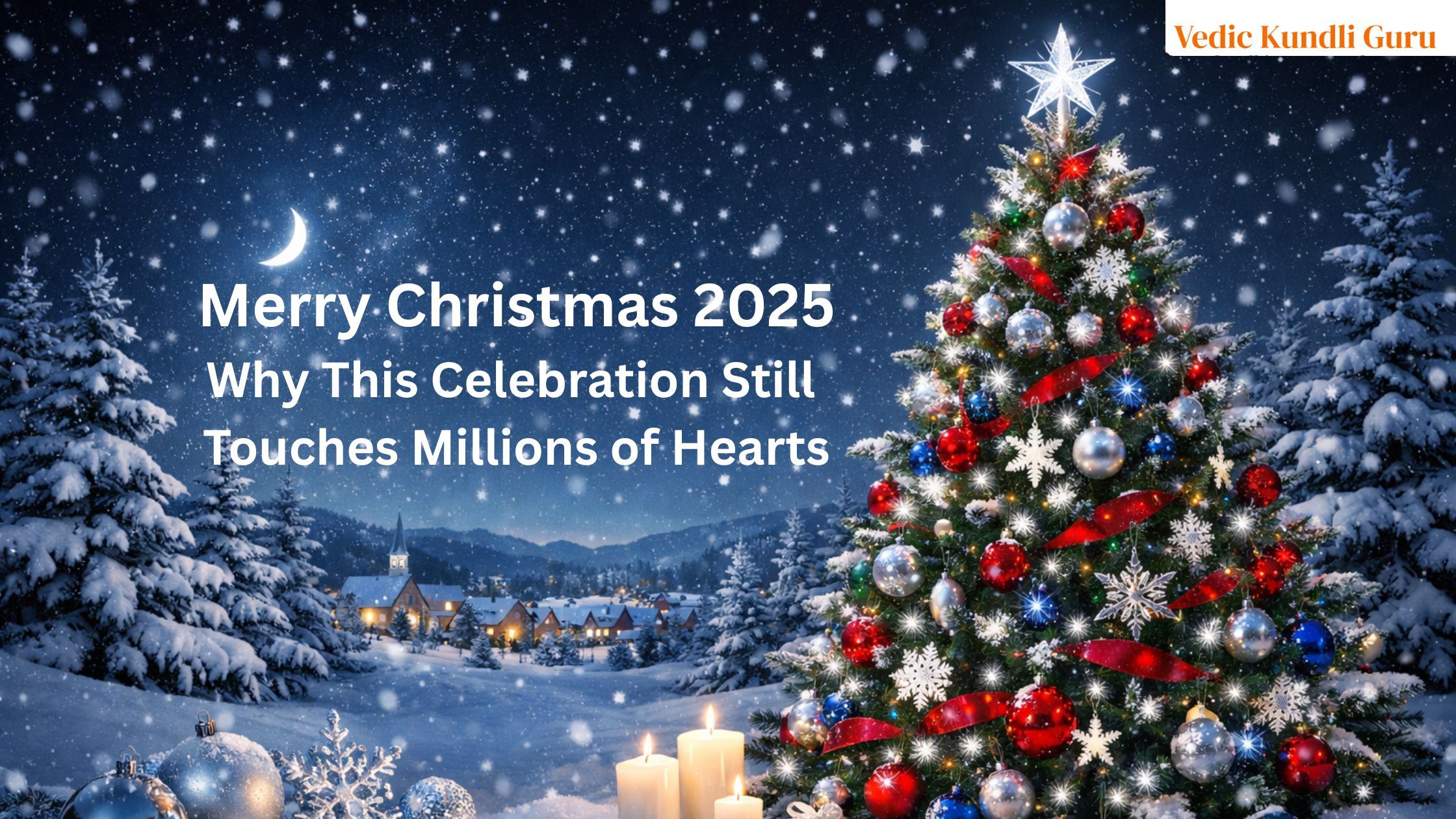
Tomorrow, Thursday, December 25, 2025, the world will celebrate Christmas 2025. Christmas is a holiday celebrated around the world, regardless of religion, location, or culture. Christmas is now a global celebration of joy, love, kindness, and togetherness, even if it was originally a Christian holiday commemorating the birth of Jesus Christ.
In anticipation of the joyous Christmas of 2025, homes will be adorned with lights, streets will resound with Christmas carols, families will congregate, presents will be exchanged, and messages of peace will be sent throughout communities and social media. In terms of its history, meaning, traditions, modern festivities, aspirations, and cultural significance in the modern environment, this piece provides a thorough and educational introduction to Merry Christmas 2025.
When will Merry Christmas 2025 be celebrated?
December 25, 2025, which is a Thursday, will mark the holiday of Merry Christmas 2025. Since Christmas occurs on the same day every year, it is a set holiday in the Gregorian calendar.
The holiday season, though, starts considerably sooner. With Advent usually beginning at the beginning of December, followed by Christmas Eve on December 24, and ending with celebrations that last throughout the New Year and Epiphany in many civilizations, preparations typically begin at the start of December.
Christmas's History
Christmas has its roots over two millennia ago. Christians believe that Jesus Christ, whose birth is celebrated by it, is the Son of God and the Savior of mankind. Christian tradition states that Jesus was born to the Virgin Mary in Bethlehem.
Despite the fact that the Bible does not provide an exact date for Jesus' birth, December 25 was selected centuries later and slowly came to be known as Christmas Day.
Evolution Throughout the Centuries
The Roman festivals of Saturnalia and the winter solstice had an impact on the development of Christmas festivities. Christmas was officially recognized by the Church by the fourth century, and customs started to develop.
By the Middle Christmas in Europe evolved into a significant cultural and religious holiday over the years. Christmas practices eventually spread around the globe as a result of globalization and colonization, changing to reflect regional beliefs and traditions.
The Religious Meaning of Merry Christmas in 2025

Merry Christmas 2025 is very important to Christians in terms of spirituality. It represents:
The birth of Jesus
God's affection for mankind
hope, salvation, and redemption
humility, faith, and kindness
Christmas Eve and Christmas Day are marked by midnight masses, nativity plays, prayer services, and unique hymns performed in churches all over the world. Christ's teachings—which emphasize kindness, forgiveness, and service to others—are reflected upon by believers.
The Cultural Significance of a Happy Christmas in 2025
In addition to its religious origins, Merry Christmas 2025 is a multicultural holiday observed by members of different religions. Christmas has become a time for the following in many nations:
reunions of families
Festivities held throughout the community
giving to charity
Festive amusement
Christmas is celebrated around the world, regardless of religious affiliation, because of its emphasis on harmony, kindness, and togetherness.
Read More:
Vahan Kharidne Ka Shubh Muhurat 2026
1111 Angel Number Meaning in Hindi
Favorite Christmas Customs Across the Globe
Ornamentation of Christmas Trees
The Christmas tree is one of the most recognizable signs of Merry Christmas 2025. The tree stands for pleasure and celebration, and it is adorned with lights, ornaments, ribbons, stars, and bells.
Giving and Receiving Gifts
Giving gifts is a key custom during Christmas. Inspired by the gifts the Three Wise Men gave to newborn Jesus, it represents love and kindness.
The Custom of Santa Claus
Father Christmas, sometimes referred to as Saint Nicholas or Santa Claus, is a mythical character who is said to bring presents to kids. Santa's image has become a significant component of contemporary Christmas tradition.
Songs for Christmas
The practice of carol singing is a beloved tradition. Merry Christmas 2025 is filled with joyous songs like "Silent Night," "Jingle Bells," and “O Holy Night.”
Lights and Christmas Decorations
The streets, marketplaces, churches, and houses are adorned with lights, wreaths, candles, and nativity scenes, which contributes to the festive and welcoming ambiance.
The Worldwide Festivities for Christmas 2025
Europe at Christmas
In Europe, the celebrations center around Christmas markets, holiday meals, church services, and family reunions. The UK, Italy, France, Germany, and other nations have distinct traditions associated with Merry Christmas 2025.
Christmas in the U.S.
Christmas in the United States includes decorations, parades, gift exchanges, and big family meals. Christmas movies, stockings, and Santa Claus are all key components.
Christmas in India
Particularly in states like Goa, Kerala, Tamil Nadu, and the Northeast, India will observe Merry Christmas 2025 with church prayers, midnight masses, star lanterns, cakes, and community gatherings.
Australia during Christmas
In Australia, Christmas is observed in the summer, frequently with barbecues, beach parties, and other outdoor events that give the holiday a special seasonal appeal.
Contemporary Merry Christmas 2025 Celebrations
Merry Christmas 2025 will be celebrated online as well since technology is now a fundamental aspect of our lives. Through social media networks, emails, and messaging apps, users will share greetings, photos, movies, and hopes.
Meetings in the virtual world
Families who live far apart sometimes celebrate Christmas by exchanging presents online, saying virtual prayers, and making video calls.
By using sustainable decorations, minimal packaging, and reusable materials throughout Merry Christmas 2025, many are now embracing environmentally friendly celebrations.
Greetings and Messages for a Happy Christmas in 2025

Christmas is incomplete without exchanging wishes. Among the typical Merry Christmas 2025 greetings are:
May you experience peace, joy, and happiness during this Christmas season.
May 2025's joyous Christmas be full of happiness and success for you.
This Christmas, may your house be full of joy and warmth.
Such messages help promote optimism and foster stronger relationships.
The Essence of Christmas's Spirit and Values
The values of Merry Christmas 2025 are at the core of the holiday, not the physical festivities. These include:
Kindness and sympathy
Humility and forgiveness
sharing and kindness
love and unity
During Christmas, many individuals participate in charity, give to the needy, and assist disadvantaged populations.
You can check your shubh timings for free:
The Social and Economic Effects of Christmas
Christmas has a major impact on the world economy. The retail, hospitality, tourism, entertainment, and shopping industries all experience a significant surge over the holiday season.
Christmas, which is observed as a significant social occasion across the globe, promotes social connection, community involvement, and cultural interaction at the same time.
Why Christmas 2025 Is Unique
Every Christmas has a unique meaning that is influenced by world events, individual experiences, and social shifts. People will pause to reflect on, be grateful for, and have fresh hope for the future during the joyous Christmas of 2025 as they approach the new year.
Additionally, it will serve as a reminder of our shared humanity, fostering peace and harmony in a world that is becoming more and more frenetic.
How to Have a Joyful and Meaningful Christmas in 2025
One may celebrate Merry Christmas 2025 in a way that is genuinely meaningful by:
Spend valuable time with your loved ones
Express gratitude.
Support people who are in need.
Cut down on unneeded spending.
Concentrate on your emotional bonds rather than physical presents.
This kind of celebration reflects the true meaning of Christmas.
Read More:
Which Colour to Wear on Which Day Astrology Guide
Conclusion
The festival of Christmas in 2025 is about more than just cheer; it's a celebration of hope, love, unity, and compassion. Christmas, which is rooted in religious belief and enhanced by diverse global cultures, still motivates individuals of all ages.
The emphasis remains on spreading joy, fostering relationships, and embracing the timeless values that define the true spirit of Christmas as the world unites to celebrate Merry Christmas 2025. Christmas continues to be a potent reminder of our common yearning for happiness and tranquility, whether we celebrate it with prayer, family get-togethers, generosity, or just sincere well wishes.
Frequently Asked Questions Regarding Merry Christmas 2025
When is Merry Christmas in 2025?
Thursday, December 25, 2025, is Christmas 2025.
Is Christmas purely a religious holiday?
Christmas is celebrated globally as a cultural and social holiday, even though its origins are in Christianity.
In what ways does Merry Christmas 2025 differ from prior years?
Every Christmas is different because it incorporates the latest social trends, technology, and individual circumstances.